

Single Ingredient Dog Treats: What Are Mystery Treats?
Single ingredient dog treats just got their biggest mainstream moment yet. On October 16, 2026, Los Angeles pet brand Joyride Dogs — a company serving more than one million customers — announced a major expansion of its single-ingredient treat line for dogs and cats, and it did so by taking aim at what it calls "mystery treats": products that leave pet parents questioning what's actually inside, where the ingredients came from, and where the treats were made. If you've ever squinted at a treat label and still had no idea what you were holding, this story is about you.
Direct Answer: "Mystery treats" is Joyride Dogs' term for treats with vague, untraceable ingredient lists — and on October 16, 2026, the brand (1M+ customers) expanded its single-ingredient line as the answer: one ingredient, clear sourcing, nothing hidden. Single ingredient dog treats name exactly one food on the label (e.g., "beef liver" and nothing else), which makes them easier to trust, easier to match to allergies, and the fastest-growing corner of a U.S. pet industry that hit $158 billion in 2025. To spot a mystery treat, look for "meat by-products," "animal digest," unnamed "natural flavors," and split ingredients on the label.
Key Takeaways
- **Joyride Dogs (Oct 16, 2026)** expanded its single-ingredient line for dogs and cats, calling out "mystery treats" with untraceable labels.
- **One ingredient = one answer:** what's on the front of the bag is what's inside — freeze-dried meats, organs, and natural chews.
- **The trend has tailwinds:** U.S. pet spending hit **$158 billion in 2025** and is projected at **$165 billion in 2026** (APPA, via the 2026 Pet Innovation Awards release).
- **Label red flags:** "meat by-products," "animal digest," unnamed "natural flavors," split ingredients, and "made with" weasel claims.
- **Our answer:** a dedicated [single-ingredient collection](/collections/single-ingredient-dog-treats) built on the same transparency principle.
What are "mystery treats," exactly?
The phrase comes straight from Joyride's announcement. According to the company's October 16 statement, mystery treats are "products that leave pet parents questioning what is actually inside, where ingredients came from, and where they were made." In other words: treats whose labels technically comply with regulations but tell you almost nothing useful.
You've met these treats. The ingredient list reads like a riddle — a parade of meals, digests, and "flavors" with no named animal, no named country, no named anything. "Pet parents shouldn't have to play detective with a bag of treats," said Sam, the company's founder. "When you buy from us, we want you to know exactly what is in the bag, where it was sourced, and where it was made. That's why we've gone all-in on single ingredient treats sourced and made here in the USA."
Joyride's expanded line keeps the concept simple: freeze-dried meats and organs across chicken, beef, turkey, pork, lamb, and fish, plus natural chews — suitable for both dogs and cats, feedable as a treat or crumbled over food as a topper. The company has also donated more than $300,000 to dog rescues, with a goal of reaching $1 million.
Why is single-ingredient trending right now?
Three forces are converging, and the Joyride announcement sits at the center of all of them.
1. The money is enormous. The American Pet Products Association reports U.S. pet industry spending reached $158 billion in 2025, with $165 billion projected for 2026 (figures quoted in the September 2026 Pet Innovation Awards release). Treats are one of the segments where shoppers are scrutinizing labels hardest — and where "premium," "natural," and "high protein" claims are finally being asked to show evidence.
2. Premiumization is getting measurable. In September 2026, WANPY Chicken Jerky was named "Jerky-Style Dog Treat of the Year" at the 2026 Pet Innovation Awards — a signal that the category is moving past marketing claims toward verifiable standards in ingredient composition and processing. Single-ingredient is the simplest version of that idea: there's nothing to hide behind when the whole label is one word.
3. Trust is the product. Joyride's framing — "mystery treats" versus "nothing to hide" — works because it names a frustration every label-reading dog owner already feels. Transparency isn't a feature anymore; it's the buying criterion.
How do you spot a mystery treat on the label?
Flip any bag over and run this five-point check. The more boxes it ticks, the more "mystery" you're buying:
- "Meat by-products" or "poultry by-products." Legal, but deliberately unspecific — it can mean organs and trim from any animal, in any proportion, from any batch.
- "Animal digest." A flavoring sprayed onto kibble and treats, made from hydrolyzed animal tissue. Which animal? The label doesn't have to say.
- "Natural flavors" with no source. "Natural" only describes how the flavor was made, not what it came from. Reputable brands name the source ("natural chicken flavor").
- Split ingredients. When "peas, pea starch, pea protein" appear separately, each one weighs less than the meat above it — but together they'd outrank it. It's a legal way to push meat to the top of the list.
- "Made with real chicken" (and little else). "Made with" can mean a token amount. "Chicken is the #1 ingredient" or a named percentage is the honest version.
None of these terms is illegal. But as Joyride's founder put it, you shouldn't need detective skills to decode a dog treat. If the label raises more questions than it answers, that's the definition of a mystery treat.
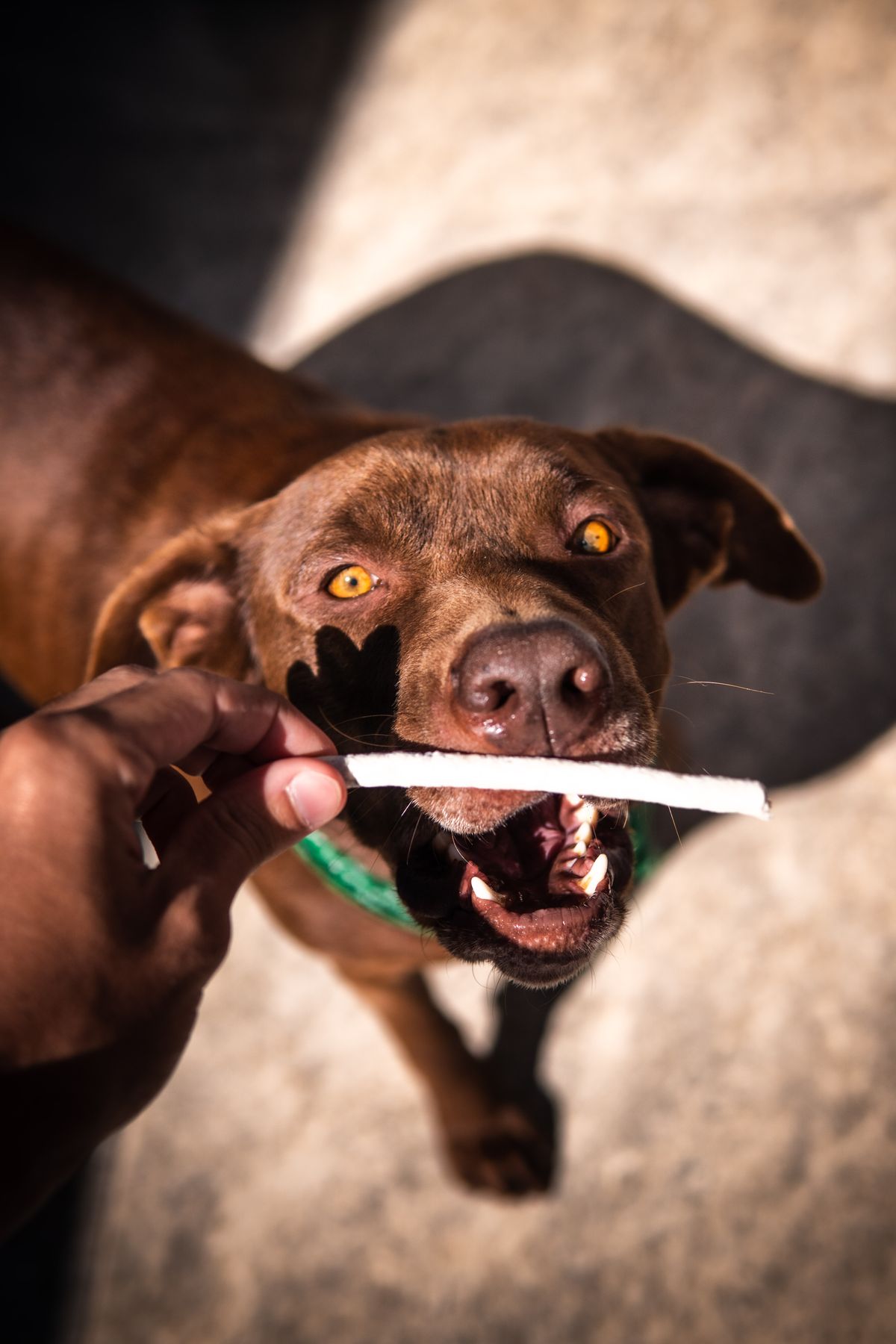
What should you buy instead? The 5-point transparency checklist
The single-ingredient standard is refreshingly easy to shop for:
- One named ingredient. "Beef liver." "Wild-caught salmon." That's the whole list — or close to it.
- A named protein source. Not "meat" — the actual animal.
- A named origin. Country or region of sourcing, stated plainly.
- Minimal processing you can understand. Freeze-dried, dehydrated, air-dried — methods with nothing to hide behind.
- A brand that answers questions. The Joyride test applies to everyone: if you emailed the brand asking "where was this made?", would you get a straight answer?
That last point is the one that matters most. A short label from a secretive company is still a mystery. A short label from a company that welcomes the question is the whole point.
Shop single ingredient dog treats at Advance Pet Mart
This is exactly why we built our single ingredient dog treats collection — every product in it is chosen on the same transparency principle Joyride just made headlines with: you should know what's in the bag. A few standouts:
- Alligator Jerky Dog Treat 5.5oz — 100% single-ingredient, wild-caught jerky. As novel a protein as it gets: ideal for dogs that have tried (and reacted to) everything common.
- Wild Boar Soft & Chewy Jerky 5.5oz — novel-protein jerky in a soft, chewy texture that works for seniors and picky eaters alike.
- Ostrich Jerky Treats 6oz — novel-protein, single-ingredient jerky. Ostrich is a lean red meat most dogs have never encountered — which is precisely the point for rotation feeding.
- Salmon Jumbo Filets 65g — wild-caught, omega-3-rich, single-ingredient fish treats. One ingredient, visible on the treat itself.
- Manicured Chicken Feet — a natural dental chew and source of glucosamine for joint support. It looks like what it is — that's the idea.
Feeding a dog with sensitivities? Our novel protein dog treats collection gathers the less-common proteins (alligator, wild boar, ostrich, kangaroo) in one place — the same proteins elimination diets reach for.
A note on honesty, since this article is about transparency: we're reporting the Joyride news as industry news. Our products weren't part of their announcement, tested against their line, or compared by any third party. We stock single-ingredient treats because we believe in the standard — not because anyone certified the comparison.
Frequently asked questions
What are mystery treats?
"Mystery treats" is the term pet brand Joyride Dogs used in its October 16, 2026 announcement for treats with vague, untraceable ingredient lists — products that leave shoppers unsure what's inside, where ingredients came from, or where the treats were made. Think "meat by-products," "animal digest," and unnamed "natural flavors." It's a marketing phrase, not a regulatory category, but it describes a real labeling problem.
Are single ingredient dog treats actually better?
They're better at one specific thing: transparency. With a single named ingredient, there is nothing to hide behind — no split ingredients, no mystery meals, no vague flavorings. That makes them easier to match to a dog's allergies and simpler to evaluate. "Better" still depends on the ingredient's quality and your dog's needs, but the label math is honest.
How do I read a dog treat label properly?
Start at the ingredient list, not the front of the bag. Look for one named animal protein as the first (and ideally only) ingredient. Flag "meat by-products," "animal digest," unnamed "natural flavors," and split plant ingredients (pea/pea starch/pea protein). Then check for a named country of origin and a guaranteed analysis. If the brand answers sourcing questions clearly, that's the strongest signal of all.
Are single ingredient treats good for dogs with allergies?
They're the easiest format for managing suspected food sensitivities, because elimination diets work by feeding one novel protein at a time — and a single-ingredient treat keeps that experiment clean. Our novel protein collection (alligator, wild boar, ostrich) exists for exactly this use case. Always confirm the plan with your vet, and check the ingredient panel yourself — "single ingredient" should mean exactly that.
Do single ingredient treats cost more?
Often, yes — named, traceable ingredients and gentler processing (freeze-drying, dehydration) cost more than rendered meals and by-products. You're paying for what's not in the bag as much as what is. Buying in our single-ingredient collection and rotating proteins is the most economical way to feed this way.
Sources: Joyride Dogs' October 16, 2026 announcement via Morningstar/PR Newswire; APPA spending figures ($158B in 2025, $165B projected 2026) and the 2026 Pet Innovation Awards via GlobeNewswire.


